Biography
Tsup Dmitry Pavlovich (1908-1995)
artist
November 14, 1908 — Born in Harbin in a family of poor settlers from Ukraine. Brother - Alexander (b. 1912).
1926. - Member of the illegal Komsomol organization in Manchuria. Arrested by the Chinese authorities along with 14 comrades on charges of trying to overthrow the existing order. Released before trial under an amnesty declared by Marshal Zhang Zuoling on the occasion of his proclamation as the supreme ruler of the Special Region of the Three Eastern Provinces of Northern Manchuria.
1929. - Departure for Russia. Work in a locomotive depot, study at a workers' faculty at the Bochkarevo station on the Ussuri railroad.
1930. - Admission to the painting department of the Institute of Proletarian Fine Arts (now the Academy of Arts) in Leningrad. Studying with D.N. Kardovsky and others.
1931–1932 - The arrival of Alexander's brother in Russia, in the city of Khabarovsk, work on the Ussuri railway as an assistant locomotive driver. Arrest by the NKVD and for "espionage and sabotage activities", execution.
1932. - Marriage. Wife - Lyudmila Mikhailovna Zakharova, student of the Faculty of Architecture of the Institute of Fine Arts.
1937. - Graduation from the institute.
1937–1940 — Teaching at the Perm Art College. Participation in exhibitions of artists of the Perm region in 1938 and 1939.
1940. - Return to Leningrad, work in LenIzo.
1941, 7 July. — Arrest. Imprisonment in the prison "Kresty".
1941, July 22. - Stage Leningrad - Minusinsk of the Krasnoyarsk Territory - for pre-investigation. Minusinsk prison.
1942, February 11. - By the decision of the Special Meeting of the NKVD in Moscow on the basis of Art. 58-1a is recognized as socially dangerous. Sentence - 5 years of exile to a settlement in the Krasnoyarsk Territory, followed by disqualification for 7 years. Incriminated: arrest in Manchuria and release without trial; brother's arrest by the NKVD; sketches in Molotov and the purchase of poisons (lead sugar) in Molotov pharmacies. Despite these explanations (released before the trial under an amnesty; he did not see his brother after 1929; he painted in Molotov for artistic purposes; he bought lead sugar to make white lead) he was convicted.
1942 March - Evacuation of L.M. Zakharova from Leningrad to Yaroslavl.
1942–1944, October — Serving exile in with. Taseevo Kansky district of the Krasnoyarsk Territory. Work as a mechanic machine and tractor station (MTS).
1944, November - 1946, July 1. - Labor instructor in the Taseevsky orphanage.
1943, August 23. - Obtaining information from L. M. Zakharova about the place where her husband was exiled. Lively correspondence before 1953
1944, July - 1945, August. - The life of L. M. Zakharova together with her exiled husband in the village. Taseevo.
1945, December. — Letter to the Chairman of the Presidium of the Supreme Soviet of the USSR M.I. Kalinin with a request to reconsider the case.
1946, 7 July. - End of link. Appointment to the Ivanovo Art School as a teacher of composition, painting and drawing, obtained in Moscow with great difficulty.
1946–1949 — Existence on a beggarly wage. Supervision of local bodies of the Ministry of Internal Affairs.
1949. - Exemption from work at the Ivanovo Art School under the pretext of downsizing. Transfer to the Saratov Art College, received from the Committee for Arts. Work in Saratov for 40 days due to the lack of the right to registration in Saratov. Return to Ivanovo. Work as a planer at the Ivanovo Mechanical Plant.
1953. - Obtaining L.M. Zakharova 8-meter room in a communal apartment in Leningrad.
1953, May 22. - The end of the period of defeat in the rights of D.P. Tsupa. Obtaining a "clean" passport. Return to Leningrad.
Since 1957. - A regular participant in exhibitions of Leningrad artists and many all-Union.
1989. - Personal exhibition in the halls of the Leningrad Union of Artists, in which L.M. Zakharov.
1993. - Death of L.M. Zakharova.
1995, October 20. - D.P. died in Rostov the Great. Zup. He was buried in Rostov the Great, the ashes of the artist's wife were transferred there.
additional information
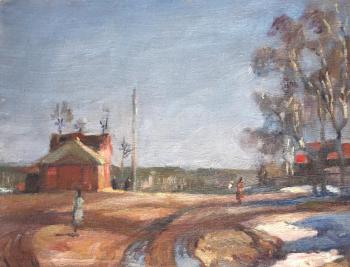
The works of the artist D.P. Tsup are in 11 museums in Russia, including the State Russian Museum. The handwritten heritage is in the Central State Archive of Literature and Art of St. Petersburg.





 add to cart





 Main page
 Painting
 Graphics
 Batic
Batic Dolls
Dolls Jeweller art
 Sculpture
 Icons
Icons Art embroidered painting
 Art glass
 Wall painting
 Mosaic
 Decor
Decor Airbrush
 Giclee, prints, posters
 Русский язык